


Fatu Malosi: A Pacific navigation of academia to tackle heart health equity
Dr Julie Winter-Smith knows the challenges of being one of the few Pacific students in academia. Today, she co-leads Fatu Malosi, A targeted national programme that is paving the way for more Pacific researchers in Aotearoa, improving heart health equity and boosting representation in academia.
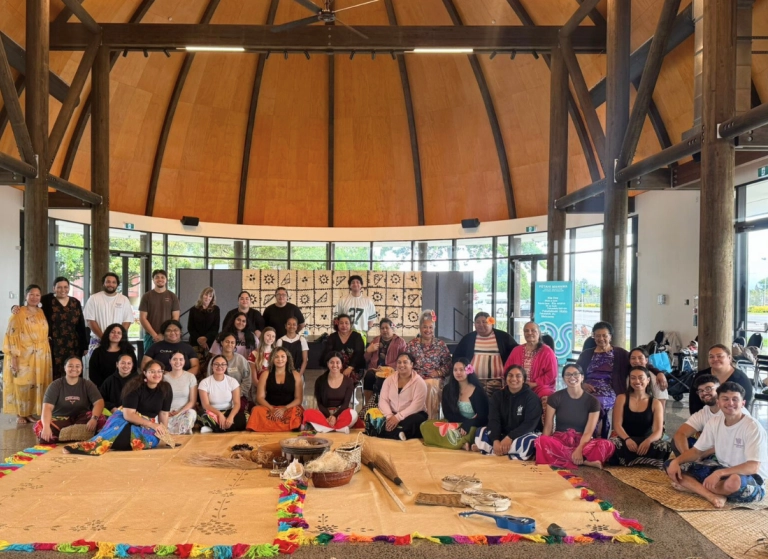
Fatu Malosi, funded by the Pūtahi Manawa Centre of Research Excellence, welcomed 25 Pacific students and their families this week at Waipapa Taumata Rau | University of Auckland for the beginning of the programme. Fatu Malosi provides a pathway for Pacific students into research and postgraduate study, an area where representation has historically been low.
“Not enough Pacific students continue into research or postgraduate study, Fatu Malosi is a pathway that contributes to filling that space”, said Winter-Smith.
Pūtahi Manawa Co-Director Pacific, Soteria Ieremia, told students they were selected intentionally to the Pacific-led programme.
“Māori and Pacific Peoples continue to experience the highest rates of heart disease in this country… Your identity and your experiences are essential to creating the solutions that work for our families and our communities.”
Why it matters
Pacific Peoples remain underrepresented in academia. In 2019, only 1.7% of academics in New Zealand were Pacific, and Pacific Professors made up less than 5% of all Professors. Since Associate Professor Sereana Naepi published these figures, funding changes have driven a 140% increase in Pacific academics.
An expert in Pacific Women’s experiences in higher education, and editor of Oceans Between Us: Pacific Peoples and Racism in Aotearoa, Naepi shared her insights with the Fatu Malosi students.
“Research is a form of service. It has the ability to change not just one person’s life, but our entire community’s,” says Naepi.
She also recently co-authored a paper that examines in detail what holding a higher education qualification, such as a PhD, means for Pacific People.
“I want more Pacific academics, more Pacific graduates, because when that happens, we get a higher socio-economic status, which addresses our health outcomes, improves our chances of home-ownership, increases our net-worth, and has other positive effects.”
Summer Research
Over the summer, Pacific students will investigate 23 cutting-edge and equity-focused topics across universities, community health providers, and the Ministry of Health. Topics include:
- AI to support Pacific Peoples with Heart Failure
- A throat swabbing program in South Auckland to reduce rheumatic heart disease
- How parents navigate the ongoing medical challenges their children face post-heart surgery and balance the influence of spirituality, including indigenous beliefs and Christian faith, and biomedical science.
Dr Sandra Hanchard, an expert in equity-focused research in Aotearoa, will be working with a Fatu Malosi student to understand the potential benefits and risks of digital health and AI in the self-management of heart failure for Pacific patients and families.
"It's important that we ground our research in Pacific and Indigenous worldviews and uphold the mana of our participants.
It makes absolute sense that we bring along a Pacific student in our research, who brings their own strengths and unique perspectives from their communities to help us codesign, interpret and disseminate our findings in a culturally responsive way.”
Global Indigenous Connection
Winter-Smith shared Fatu Malosi with the world at two international indigenous conferences this year, including the World Indigenous Peoples Conference on Education (WIPCE) hosted by Auckland University of Technology last week.
“Showcasing Fatu Malosi ensures that our Pacific stories, knowledge systems, and solutions are visible and heard. Conferences such as WIPCE provide opportunities for Indigenous peoples internationally to learn from one another and for collective advocacy”, says Julie Winter-Smith.
Next Steps
Fatu Malosi students will come back together to present their work, alongside their peers in the Pūtahi Manawa Māori sister programme, Kura Raumati, in February 2026.