

Integrated Research Modules
At the core of our research endeavours lie our Integrated Research Modules (IRMs), representing our flagship projects. These Modules employ a range of multidisciplinary approaches, such as Māori and Pacific methodologies, epidemiology, epigenetics, physiology, bioengineering, and clinical science, to effectively tackle specific heart health challenges.
Below are the core research projects Pūtahi Manawa fund, each holding the potential to make a significant impact to the health and wellbeing of our communities in the future.
2025
Addressing heart health gender disparities in Aotearoa
Waipapa Taumata Rau | University of Auckland
Amount Awarded: $1.5 million
Heart disease is the major killer of women in Aotearoa New Zealand, although this is frequently not recognised. Moreover, women are not represented in clinical trials at the same level as men. The risk of heart disease in women rises significantly with hormonal shifts, especially in the menopause transition. Why this occurs is not well understood. Potential changes in risk profiles due to hormone initiation in transgender populations is also poorly understood. There is a clear need for education, resourcing, and mechanistic knowledge from the cellular to the community level.
We will:
(1) identify what is known about the menopausal risk of heart disease with our communities and clinicians, develop resources, and learn from our kaumātua.
(2) Identify what changes occur in our cells and systems to underpin womens increased risk of heart disease.
(3) Assess support for Pasifika women and build resources for change. (
4) Conduct a pilot study examining the feasibility of a transgender heart disease risk database for Aotearoa.
Together this research will shift the balance of knowledge for equitable outcomes for women and other minoritised gender experiences.

Professor Johanna Montgomery
University of Auckland

Allamanda Faatoese

Associate Professor Justine Camp

Ms Takiwai Russell-Camp
2025
Te āhua o te Manawa - State of the heart - Maroroya vinaka na yalomu
Waipapa Taumata Rau | University of Auckland
Amount Awarded: $1.5 million
Inherited cardiovascular diseases (CVDs) such as cardiomyopathies, channelopathies, and aortic diseases can cause sudden death and immense distress for families. Identifying the underlying genetic cause is vital for accurate diagnosis and clinical care. For Māori and Pacific peoples, current genetic testing provides fewer answers compared to other ethnic groups, leading to ongoing uncertainty, intergenerational loss, and entrenched health inequities.
This project will shift the landscape of cardio-genomic research in Aotearoa New Zealand (ANZ) by delivering three key outcomes:
(i) We will build a secure ANZ-based genetic variant database by uniting siloed genetic test data from ~3000 patients with inherited CVDs. This central resource will enable accurate interpretation of genetic results, especially for Māori / Pacific peoples who are underrepresented in global databases. We will also study detailed, long-term health information on affected patients/families to uncover patterns and identify ways to improve care for patients and whānau.
(ii) To strengthen understanding and communication about genetics and inherited cardiovascular conditions, we will co-design culturally relevant resources with Pacific patients/families. (iii) We will apply advanced genome sequencing to uncover new genetic causes for patients who have exhausted standard clinical testing.
This is critical for Māori /Pacific families, who are most affected by the limitations of standard genetic testing. This project embodies the “not about us without us ” principle with governance by our Kaitiaki Rōpū ensuring tikanga and Māori data sovereignty, and a Pacific team leading community engagement and managing Pacific genomic data. This partnership ensures research is meaningful, culturally grounded, and benefits Pacific and Māori patients.
Polona Le Quesne Stabej
University of Auckland
Nikki Earle
University of Auckland
Martin Stiles
University of Auckland
Terisa Tagicakibau
Joshua Agnew

Dr Karaitiana Taiuru
Taiuru & Associates Ltd
2025 - 2028
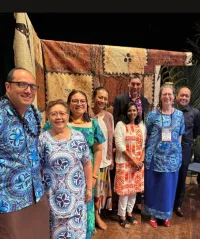
Moana Nui-a-Kiwa Vuvale Bulabula: Pacific RHD Pathways
Host Organisation: Cure Kids
Amount Awarded: $1.5 million
Acute rheumatic fever, a serious complication of untreated Strep throat, disproportionately affects Pacific communities in Aotearoa New Zealand and the Pacific Islands, leading to high rates of rheumatic heart disease. A collective of Pacific health professionals and researchers is working to reduce these disparities through culturally grounded care models, echo screening training, and improved antibiotic adherence.
Adam Dennison
Te Whatu Ora
Jyotishna Mani
Cure Kids
Monleigh Ikiua
University of Auckland
Erini Kala
Civil society for People Living with RHD - Heart Heroes Fiji
2023-2026
Te ara Poutama: Living well with heart disease

Erina Korohina
Host Organisation: The Centre of Health
Amount Awarded by Pūtahi Manawa: $1,504,251
Heart Foundation Co-funding: $1,023,041
Te Ara Poutama is a Hapori Māori-led Heart Health Research Programme, which is foundational for developing culturally-grounded approaches to equitable Māori heart health.
The main anticipated outcomes include:
- establishing Pūtahi Manawa’s first Kaupapa Māori Heart Health Research Programme, that has meaningful Māori engagement embedded throughout
- training 30 Māori into the multidisciplinary heart health workforce
- co-designing, with Māori whānau living with heart disease, solutions from their lived experiences
- gaining unique and important insights to factors that contribute to heart disease amongst Māori, and identifying the burden of heart disease for Māori including social, cultural, whānau, spiritual, emotional, psychological, and physical impacts, to enable improved Māori heart health.
“Taken together these outcomes have the potential to significantly improve Māori heart health in meaningful ways.”
Katrina Poppe
Waipapa Taumata Rau | University of Auckland

Kataraina Davis
Heart Foundation
Nikki Earle
University of Auckland
Allamanda Faatoese
Andrew Lowe
Auckland University of Technology
Mayanna Lund
Rory Miller
University of Otago

Clare O'Donnell
Te Toka Tumai

Andree Pearson
Christchurch Heart Insititute, University of Otago, Christchurch
Anna Pilbrow
University of Otago
Dr Jichao Zhao
2022-2025
Sweet pressure: Improving outcomes for people with diabetes and high blood pressure in Aotearoa

Dr Fiona McBryde
Waipapa Taumata Rau | University of Auckland
Amount awarded: $1,499,737
Most adults with diabetes also have high blood pressure and about half of people with high blood pressure don’t have good blood sugar regulation which can lead to diabetes. Good control of both high blood sugar and high blood pressure (“Sweet Pressure”) is essential for reducing risk of heart attacks and strokes.
In current health care, diabetes and high blood pressure are managed as different conditions. This programme of work will look for common links between the mechanisms regulating blood pressure and blood sugar.
We will co-create an outreach and education program to raise awareness about the dangers of Sweet Pressure and how to identify its presence. Our ultimate goal is to achieve improved and more equitable outcomes for people with Sweet Pressure in Aotearoa.
2023-2026
Our heart, our genes, our story

Dr Polona Le Quesne Stabej
Waipapa Taumata Rau | University of Auckland
Amount awarded: $1,500,000
Inherited heart diseases are a major cause of sudden unexpected death in young people. The genetic causes of these conditions have been researched for decades, but answers are found for less than half of patients. The chance of a genetic diagnosis is even less for patients from ethnic minority populations (including Māori and Pacific) because research has historically been biased to European ancestry and genetics. The purpose of this project is to find answers for families in Aotearoa where European-based genetic tests have failed to find a cause.
We think that genome sequencing can find previously unknown genetic changes causing inherited heart conditions. By finding the disease-causing genetic changes that whānau may carry, we can raise community awareness of the power of gene sequencing, help transform their healthcare through earlier detection of whānau members who may carry the disease-causing gene, improve diagnosis of heart-related genetic problems, and in some cases, provide genetically guided treatment and counselling.
Posters
DMPK 3’ untranslated repeat expansions in unexplained sudden cardiac death in the young
Developing Culturally Appropriate and Accessible Research Documentation
Media
Hidden genetic culprit found for sudden cardiac deaths of young people
Selected Publications
Zoe Ward, Jackson O’Neill, Rachael Stiles, Hui Hui Phua, Stephanie Burcher, Nikki Earle, Andrew Martin, Jia Xin Mok, Jackie Crawford, Jenny Eaton, Saraya Hogan, Lisa Worgan, Belinda Gray, Charlotte Burns, Tom Donoghue, Martin K Stiles, Laura Yeates, Cristin G Print, Ian Hayes, Jonathan R Skinner, Richard D Bagnall, Polona Le Quesne Stabej, DMPK 3′ untranslated repeat expansions in unexplained sudden cardiac death in the young, European Heart Journal, 2026;, ehag247, https://doi.org/10.1093/eurheartj/ehag247
Contact: Dr Polona Le Quesne Stabej

Saraya Hogan
Zoe Ward
University of Auckland
2023-2026
Restoring the balance: Heart health of wāhine, Fafine, Va’ine, Fifine and Women in Aotearoa
Professor Johanna Montgomery
University of Auckland
Host Organisation: University of Auckland
Amount awarded: $1,515,106
In 2019, 275 million women were diagnosed with heart disease, with heart disease the cause of 35% of all deaths in women worldwide. Yet Cardiovascular disease among women is understudied, under-recognised, underdiagnosed, and undertreated globally.
In Aotearoa, the bleak reality is that heart health inequities experienced by women are even more significant for Māori and Pacific women. It is shameful that we are in this position at the start of the 21st century. Our research programme aims to restore the balance by authentically engaging with communities in co-design cycles to work together towards heart health equity in Aotearoa.
Specifically, we will;
1) Create a heart health kete (basket of knowledge) via co-design with Māori and Pasifika communities to generate knowledge discovery, transformation and dissemination
2) Produce ‘uniquely Aotearoa’ perspectives papers and systematic reviews to document heart health considerations and inequities across the life-course of NZ wāhine
3) Generate new knowledge of female-specific cardiovascular risk factors by analysing existing and developing new datasets to inform new research, and to improve accuracy of CVD risk prediction for women
4) Acknowledge and consider the unique heart health environment for transgender people through community connection, engagement and co-design
5) Support the workforce development of wāhine via educational and career development opportunities
Our overall goal is, to amplify the mana wāhine voice and change the way that heart health research is conducted in Aotearoa/New Zealand.
Cassie Withey-Rila
Lisa Wong
Allamanda Faatoese
Ms Takiwai Russell-Camp
Dr Susannah Stevens
Kim Mellor
Katrina Poppe
Waipapa Taumata Rau | University of Auckland

Julia Shanks
University of Auckland
Ana Luiza Sayegh
Kylie Short Kylie Short
University of Canterbury

Dr Anna Ponnampalam

Dr Kate Thomas
Larry Chamley
Nikki Earle
University of Auckland
Associate Professor Justine Camp