
Le Alamea Pūtahi Manawa
The Le Alamea Pūtahi Manawa Fund supports high-impact, interdisciplinary projects that advance Pacific heart health equity through research excellence, community leadership, and innovation. Inspired by the Samoan proverb “E fofo le alamea le alamea” – “the alamea heals itself” – this fund honours the resilience and wisdom within Pacific communities to lead solutions for their own well-being.
February 2026 - September 2028
Impacting Rheumatic Fever and Rheumatic Heart Disease Awareness Through Art Health Model
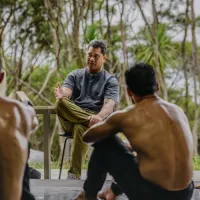
Neil Ieremia
The Black Grace Trust
Host Organisation: The Black Grace Trust
Amount Awarded: $500,000
Can targeted arts-led initiatives effectively increase awareness of Rheumatic Fever and Rheumatic Heart Disease, contributing to improved health outcomes for Pacific communities in Aotearoa New Zealand?
Art is not only a source of joy, connection and inspiration, but it also has the proven power to provoke thought, shift perspectives, and inspire change. For Pacific peoples, artistic expression - through storytelling, performance, music, and dance - is deeply embedded in daily life and cultural identity. Yet, this potential has not been harnessed to address Rheumatic Fever and Rheumatic Heart Disease.
Our approach draws on these rich traditions to design experiences that resonate with Pacific communities, delivering vital health messages in ways that feel familiar, relevant, and empowering. By retelling the story of Rheumatic Fever / Rheumatic Heart Disease, we will move away from current narratives of blame, stigma, or exclusion and instead advocate for a fairer, more equitable health system in Aotearoa, New Zealand.
Through our research, we aim to demonstrate that a targeted arts-led initiative can serve as a more effective communication strategy to engage Pacific communities, fostering greater awareness around prevention and treatment of Rheumatic Fever and Rheumatic Heart Disease, ultimately leading to improved health outcomes.
January 2026 - July 2027
Heartstrings heritage: Learning from Pasifika family stories

Professor Tracie Mafileo
Mana Pacific Consultants
Host Organisation: Mana Pacific Consultants
Amount Awarded: $238,789
Our research project shifts the focus from negative experiences of Pasifika families dealing with cardiovascular disease and focuses instead on family stories of overcoming difficulties, heart health, advocacy, and wellbeing. Cardiovascular disease is a major health issue for Pasifika. Given the likelihood of it being passed down between generations, it has been described as an ‘inherited heart disease’. Heart health is therefore a collective experience for Pasifika families and their communities. Meaningful connections and coping strategies for navigating wellbeing journeys are found in Pasifika family stories shared across generations. Pasifika peoples have holistic strengths with family contributing workable solutions.
This research will examine how Pasifika families have navigated the health system by capturing their lived experiences of advocacy across generations through family stories. By exploring how familial connections create and sustain resilience and healing in Pasifika families, we aim to identify and highlight effective strategies to improve healthy heart outcomes. Reciprocity in intergenerational knowledge transfer within Pasifika families is also important as it enables a co-creational exchange between younger and older generations.
Our project will talanoa with Pasifika families who have a family member with cardiovascular disease and will produce inspirational video resources and workshops for Pasifika communities and health providers to promote Pasifika heart health equity. This can be used to inform and educate others experiencing similar circumstances, as well as to serve as a resource for cardiovascular-focused health providers.
Fatu na totō: Co-Designing Pacific-Grounded Heart Health Resources with Samoan women

Amy Maslen-Miller
Waipapa Taumata Rau | University of Auckland
Amount Awarded: $250,000
Fatu na totō “a heart that is planted”, inspires this project. Drawn from Samoan lyrics, it speaks of determination, hope, and life even in difficult times. This imagery reflects our vision: may we, as Samoan women, plant seeds of hope together to build stronger, healthier families and communities, grounded in heart health.
At its heart, this project is about tautua (service) and fesuiaʻi (reciprocity): returning knowledge to Pacific communities in ways that respect their stories and strengthen their wisdom. It builds on PhD research with over 100 Samoan women, which bridged culture and biology to better support Pacific heart health. The research highlighted the cultural significance of Samoan foods carrying respect, ancestry, and identity beyond nutrition, alongside gene–diet interactions that examined how genetic variants may influence cardiovascular risk.
This foundation has nurtured networks across Pacific communities, clinicians, health workers, and researchers in New Zealand. Together, and guided by Samoan women, the project will co-create resources that bring research into everyday life, focusing on diet, genetics, and heart health. Planned outputs include a book weaving nutritional knowledge, women’s stories, and health insights, and a documentary shared through trusted platforms such as Moana Connect and Pacific Heartbeat (Heart Foundation NZ).
Fatu na totō affirms that science, culture, and community can grow side by side. By planting seeds of heart health today, we nurture and create pathways for intergenerational wellbeing.
February 2026 - August 2028
Improving Heart Health through Culturally Centered AI Nutrition Coaching
Host Organisation: Moana Connect
Amount Awarded: $499,868
Pacific populations are a priority group for healthy nutrition-related interventions to prevent premature mortality from heart disease and other long-term conditions. Nutrition-related risk factors are eminently modifiable, with appropriate support. This project will develop and validate an innovative care model using a chat-based, generative artificial intelligence AI-powered Nutrition Coach designed specifically for Pacific adults with long-term conditions.
Accessible through WhatsApp, the Nutrition Coach will support food logging and provide instant advice in Gagana Samoa and Lea Faka-Tonga. Co-development with Samoan and Tongan communities will ensure guidance is culturally inclusive, meaningful, and accessible. Currently available only in English, the Nutrition Coach will be co-developed, adapted, validated, and piloted in real-world settings through partnerships with Pacific Health Services Hutt Valley (PHSHV) in Wellington and Moana Connect in Auckland.
Pacific adults (Samoa & Tonga) with long-term conditions will test the tool across both sites, with outcomes measured in nutrition knowledge, health literacy, dietary behaviours, usability, and acceptability.
By combining advanced AI technology with Pacific cultural practices and strong community partnerships, this project seeks to deliver a sustainable, community-ready solution to improve cardiovascular and metabolic health outcomes. The Nutrition Coach also addresses the shortage of Pacific dietitians by providing timely, culturally tailored support at scale. While the first phase focuses on Samoan and Tongan communities, the same co-design, translation, and validation process will extend to other Pacific languages, ensuring broad reach across Aotearoa’s diverse Pacific communities.

Dr Amio Matenga Ikihele
Moana Connect; University of Auckland

Candice Mariner
Pacific Health Services Hutt Valley
February 2026 - August 2028
Tiritiria to nga vaevae ki mua: Tauaranga Moana Cook Islands Community Sports Access Program
Host Organisation: Pacific Islands Community Trust Bay of Plenty (PICT BOP)
Amount Awarded: $200,000
Pacific Peoples experience disproportionately high rates of cardiovascular disease (CVD), and this remains a major issue highlighted by recent evidence and media coverage of the Te Manawanui Trust report. When we look at disaggregated data, breaking down Pacific groups by island nation, the Cook Island Peoples in Aotearoa show higher rates of CVD than other Pacific groups. This indicates the need for targeted, culturally specific approaches rather than treating all Pacific communities as one group. One proven way to improve heart health is through regular physical activity. However, across Aotearoa, research consistently shows that the cost of entry and participation in sport is a key barrier for Pacific families. Removing or subsidising costs has been shown to increase participation and activity levels, supporting improved wellbeing.
In Tauranga, there are currently very few sports access programmes for Pacific communities and none specifically for Cook Island families. At the same time, our Cook Island Society and Culture Group continues to grow, providing a strong platform for community engagement. Our proposed initiative Tiritiria tō ngā vaevae ki mua: Tauranga Cook Island Community Sports Access Program aims to improve physical activity, heart health, and wellbeing for our community by reducing cost barriers and creating culturally meaningful pathways into sport.
We will use this project as a proof of concept, gathering evidence to advocate for sustained investment from local health agencies and councils.
Mr Bevan Rakoia
Te Moananui Society Incorporated
Joshua Agnew
Dr Simone Watkins