

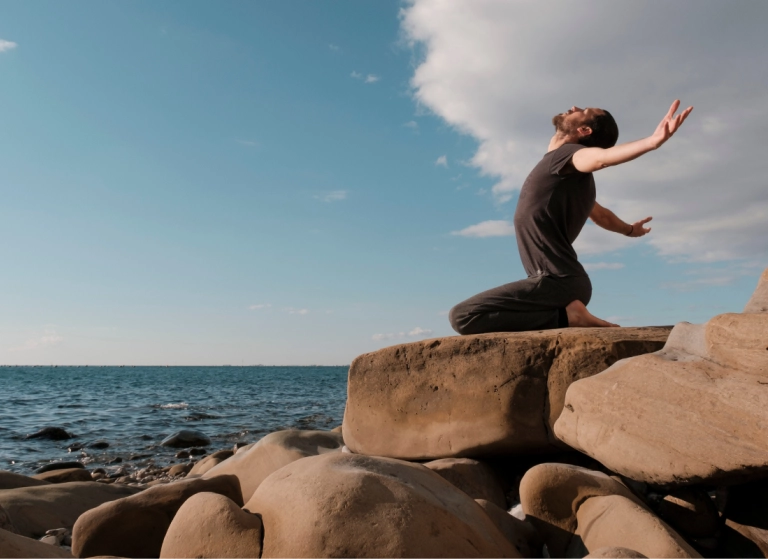
Breathing new life into heart health research
What if something as simple as the way we breathe could change our risk of cardiovascular disease?
That’s the question at the heart of Pūtahi Manawa-funded research led by Olivia Harrison and Fraser Beck, bringing together mātauranga Māori, cardiovascular science, neuroscience, mental health and breathing practices.
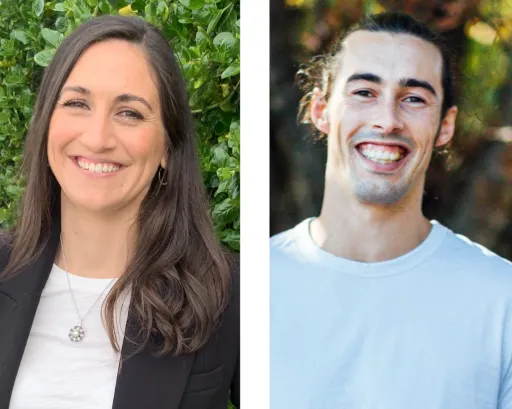
Ōtākou Whakaihu Waka | University of Otago researchers, Dr Olivia Harrison, a neuroscientist and exercise physiologist, and Fraser Beck, a breathing practice expert of Kāi Tahu, Kāti Mamoe and Waitaha descent, are investigating the relationship between elevated anxiety and cardiovascular health – looking closely at what is happening in the body before cardiovascular disease has a chance to announce itself.
The research sits at the intersection of two major public health challenges facing Aotearoa. Heart disease remains the leading cause of death in New Zealand, while anxiety is increasingly recognised as a significant contributor to poor health and wellbeing. New Zealand has one of the highest rates of anxiety in the world, with Māori disproportionately affected. Some estimates suggest up to 70% of New Zealanders will experience disabling levels of anxiety during their lifetime.
The connection between these conditions is becoming harder to ignore.
“Anxiety, as well as influencing your lifestyle decisions, for example how well you eat and how much exercise you manage to do, is also an independent risk factor for cardiovascular disease. You can kind of think of it like turning the system on and leaving it on. Eventually, there are going to be signs of strain, and things are going to start fraying around the edges”. – Dr Olivia Harrison
International research shows anxiety is associated with a 26% increased risk of developing cardiovascular disease and a 50% increased risk of sudden cardiac death.
Participants with elevated anxiety will undergo detailed cardiovascular, neurological and physiological testing, before completing a 12-week breathing intervention led by Fraser, a breathing practice expert. The team will then repeat the testing to see what changes, and whether improvements in mental health are accompanied by changes in cardiovascular health.
Starting with the breath
At the centre of the project is te hā – the Māori concept and understanding of the breath.
For Olivia, it provides an integral bridge between mental and physical health. Stress can be reflected in the way we breathe, while breathing can also be consciously changed, potentially influencing the systems connecting the two.
The researchers are also exploring what Western science can learn from knowledge that has long been held within Māori communities.
“We want the research to celebrate this knowledge Māori communities already have and provide another way of engaging with mātauranga Māori”.
That learning has shaped the research itself, rather than sitting alongside it as an additional layer. A community Kāhui (group of people) has helped guide the study and interventions, including how the research is delivered and what will make it meaningful for participants.
One example is the use of porotiti – spinning discs that can help connect something happening in the mind and body with something tangible and visible.
Olivia explains the relationship between the researchers and the community is grounded in reciprocity.
“We want to make sure that we listen and learn from our community members, not just tell them what we’re doing. And we aim to give more than we take” she says.
The team has built those relationships over years through noho marae, volunteering, public engagement and regular opportunities to report back and listen.
Looking upstream
The project’s focus on people with elevated anxiety, rather than only those with a diagnosed mental health condition, is important.
“Anxiety exists on a continuum. Someone can be experiencing substantial anxiety without meeting the threshold for a clinical diagnosis – and may already be experiencing physiological changes that could have implications for their cardiovascular health”, says Olivia.
There is also a clear need for new solutions. Despite the significant burden of both anxiety and cardiovascular disease in Aotearoa, existing treatments largely address them separately. Anxiety treatments typically focus on psychological symptoms, while cardiovascular treatments do not directly address the autonomic dysfunction that is increasingly recognised as a link between mental and cardiovascular health. This creates an opportunity for interventions that could improve both at the same time.
The team is also looking at blood markers of inflammation and how the brain and cardiovascular system communicate.
“It’s extensive and has an exploratory element”, comments Olivia, “we are really trying to look in-depth across a host of different markers to find the early signs of cardiovascular strain. And that hasn’t been done before.”
Breathing also offers an unusually accessible intervention. The team is developing a toolbox of breathing practices rather than prescribing one technique for everyone, recognising that different approaches will work for different people.
Fraser and Olivia want to give people something practical they can use, rather than another measure of what they are doing wrong.
A different way of doing and funding research
The project brings together disciplines, expertise, and knowledge systems that are often separated within traditional research structures.
“Traditional funding tends to put research into boxes. We fit into the mental health space, but I’m not a psychiatrist or clinical psychologist. We also fit into cardiovascular health, but I’m not purely a cardiovascular physiologist. Our team is highly integrative, bringing different disciplines and knowledge systems together around one idea. Pūtahi Manawa was a perfect fit because integration is the whole point.”
Olivia brings expertise in neuroscience, exercise physiology and cardiorespiratory research. Fraser brings a community perspective, practical experience, and te āo Māori knowledge to the project, while also being able to undertake his Master’s studies with Pūtahi Manawa support.
Building better prevention
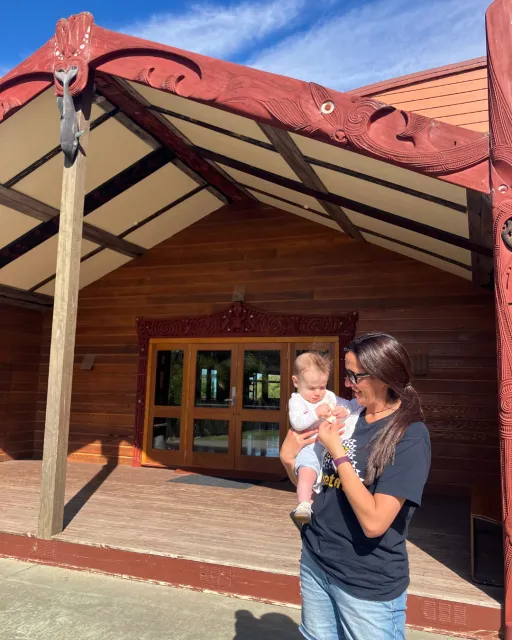
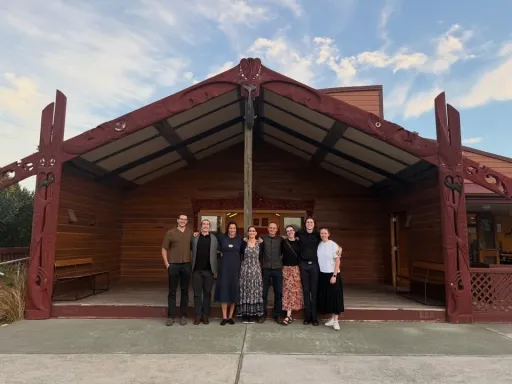
team, holds Olivia's pēpi outside Puketeraki Marae.
Ultimately, the study is about moving prevention further upstream — understanding the pathways to cardiovascular disease and identifying opportunities to intervene before disease develops.
“If we’re serious about improving heart health in Aotearoa, we need to fund research that looks beyond the heart itself. Some of the major determinants of cardiovascular health happen long before someone develops heart disease, so we need to understand those pathways and invest in prevention. Treating disease will always be important, but if we can prevent it, those two approaches together will be much more powerful to make a meaningful difference”, says Olivia.
The project shows what can happen when cardiovascular research starts further upstream, and when the people and knowledge at its heart help shape the research itself.