

Leading Conversations on Equity at CSANZ 2026
Pūtahi Manawa researchers, students, staff and Co-Directors were out in force at the Cardiac Society of Australia and New Zealand (CSANZ) 2026 New Zealand Annual Scientific Meeting, sharing research, strengthening collaborations, and championing equity in heart health.
Soteria Ieremia, Pūtahi Manawa Co-Director Pacific, said she was proud to represent Pūtahi Manawa at Australasia’s leading cardiovascular scientific forum.
“The conference provides an opportunity to showcase our contributions to cardiovascular science, including precision medicine, alongside our Māori and Pacific-led equity research, while strengthening collaborations and reinforcing Pūtahi Manawa's leadership in translating community-driven research into improved heart health outcomes"
- Soteria Ieremia
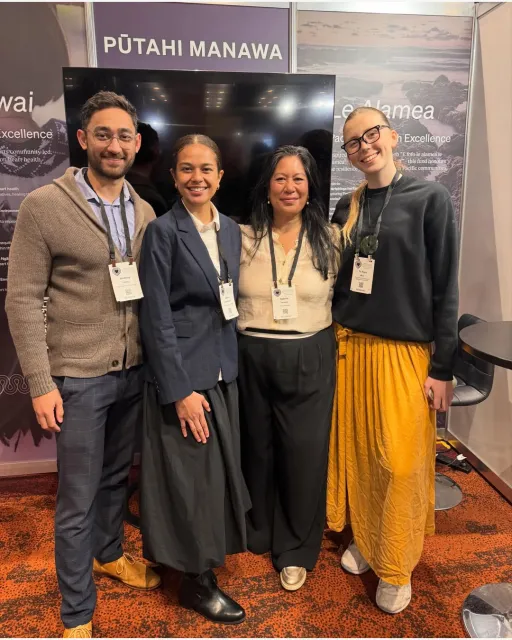
The conference brought together local and international clinicians, researchers, allied health and community health workforce for three days to share a wide range of work across specialist areas. Two Fatu Malosi students and one Kura Raumati student, alongside their supervisors, presented posters from their summer research projects while engaging with leading cardiovascular researchers and clinicians from across Aotearoa and beyond. Soteria said she is immensely proud of the incredible young Pacific researchers and Fatu Malosi summer students presenting their posters at the meeting.
"Not the usual space you'd see us in, but a necessary one for Pacific representation to address Heart Health equity and growing the workforce."
- Soteria Ieremia
Addressing Inequities
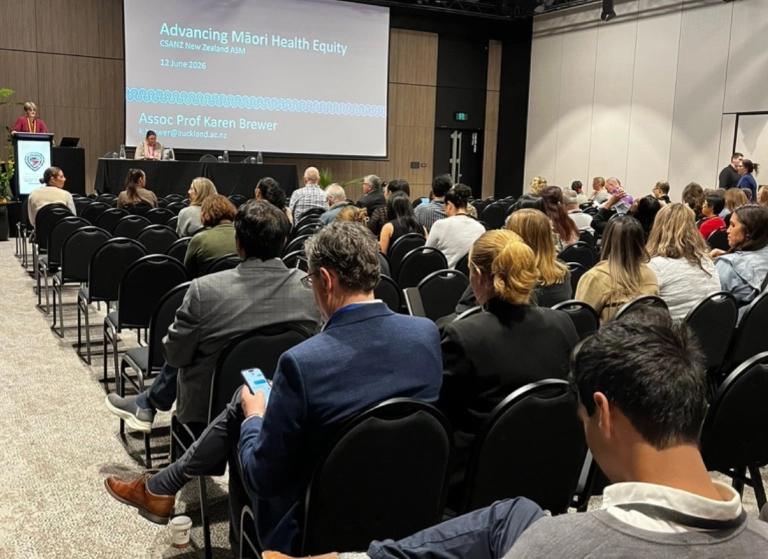
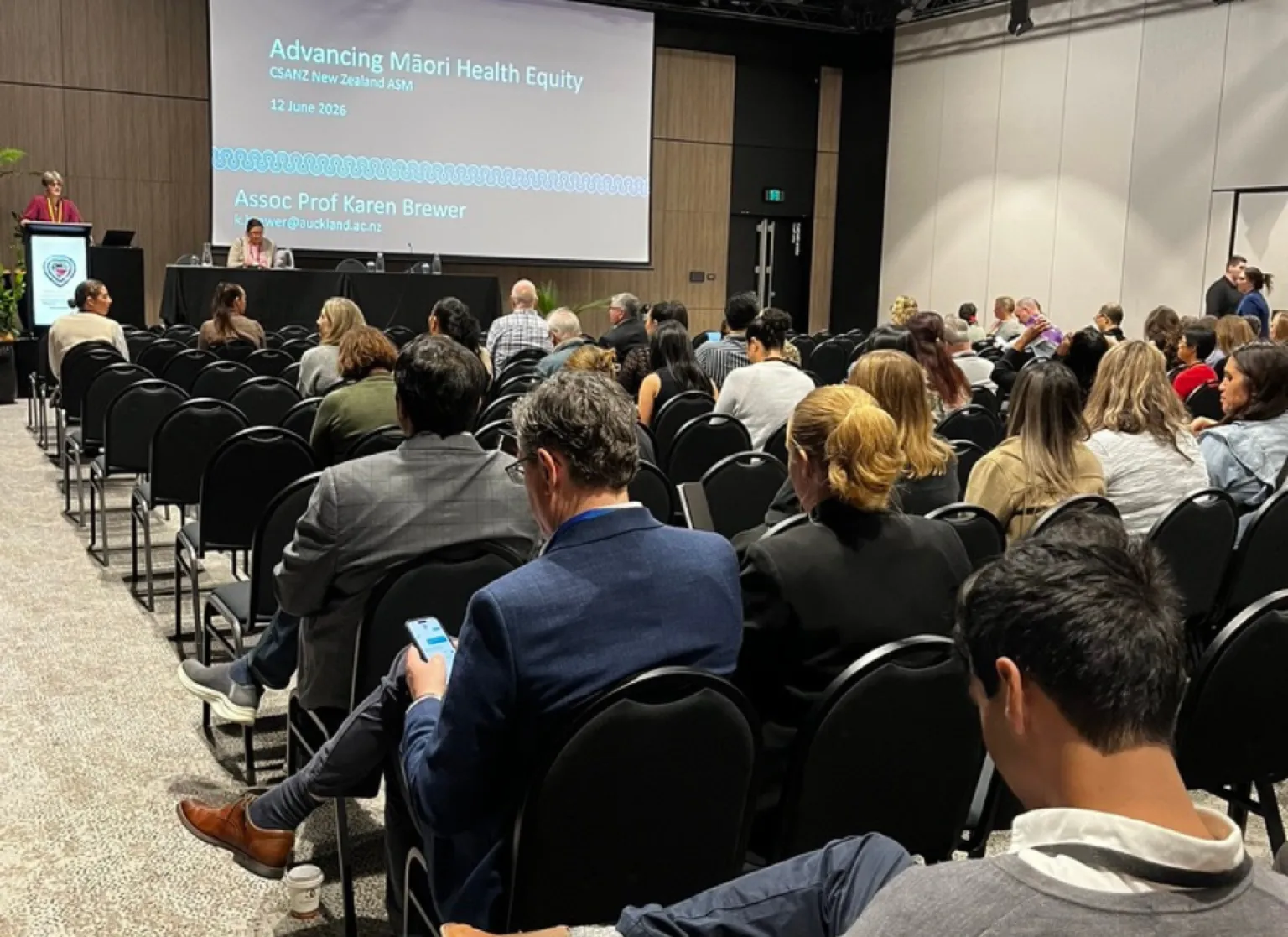
It’s well known that stark inequities in heart health prevention, treatment, care, and outcomes exist in Aotearoa, and CSANZ brought these to the forefront in an afternoon session co-chaired by Associate Professor Karen Brewer and Dr Sandra Hanchard, Heart Foundation and Pūtahi Manawa research fellow.
Karen, Co-Director Māori of Pūtahi Manawa, also gave the opening presentation, where she took the opportunity to drive home the difference between equality and equity.
“Inequality is a difference. Inequity is an unfair difference. It’s crucial that we understand this so we can collectively move towards a fairer health system for all in Aotearoa.”
- Karen Brewer
Karen showed that the average years of life lost for Māori across different types of heart disease is more than twice European and that this is an unfair difference – an example of inequity. She urged the audience to accept that different people need different things to achieve equivalent outcomes.
Dr Julie Winter-Smith closed the session with a talk on Fatu Malosi and Pūtahi Manawa’s dedicated Pacific scholarships as an example of closing the heart health gap for Pacific People in Aotearoa.
“Pūtahi Manawa recognises that representation drives responsiveness and we’re uniquely positioned at the moment to invest in building the Pacific heart health workforce”.
- Julie Winter-Smith
Advancing Equity
It was the first time Pūtahi Manawa had a dedicated stand at the CSANZ NZ ASM, but for Karen, it was her fifth meeting, and she had witnessed the move towards a more inclusive conference.
“During those five years, I have seen a change in the content and focus of the meeting, with a definite shift towards equity. This year, many of the presentations demonstrated consideration of equity and cultural safety, and this was not confined to the equity awards session.”
- Karen Brewer
One standout presentation in the Equity Award category was delivered by Tash Burton on behalf of Hannah Lowe from Manawaora Integrated Health & Research, whose kaupapa Māori study went on to win the award.
Tash presented Hannah’s research exploring what Kapa Haka can teach us about culturally grounded approaches to cardiovascular health and wellbeing – possibly the first clinical study to comprehensively examine the heart health impacts of Kapa Haka participation.
“Ultimately, this work suggests that promoting Māori health is not only about adapting existing interventions of Māori communities, but also about recognising, supporting, and learning from the strengths and solutions that already exist within the communities.”
- Hannah Lowe
Karen was one of the three judges for the category.
“Hannah's research is scientifically rigorous, unapologetically Māori, and community-led. Because kapa haka is already an important part of Te Ao Māori, it is sustainable and scalable as a heart health initiative and has huge potential for positive heart health impacts.
Tash also deserves an acknowledgement because she presented it and answered the audience’s questions on the work so well, when she was a fellow competitor herself.”
- Karen Brewer
From supporting emerging Māori and Pacific researchers to showcasing innovative equity-focused research, CSANZ 2026 highlighted the growing impact of kaupapa-driven cardiovascular research. The conference provided valuable opportunities to share knowledge, build partnerships, and advance Pūtahi Manawa's vision of heart health equity for Māori and Pacific Peoples in Aotearoa.