
Member Spotlight: Chelsea Cunningham
He uri tēnei o Ngāti Kahungunu, Ngāti Tūwharetoa, Ngāi Tahu me Ngā Rauru.
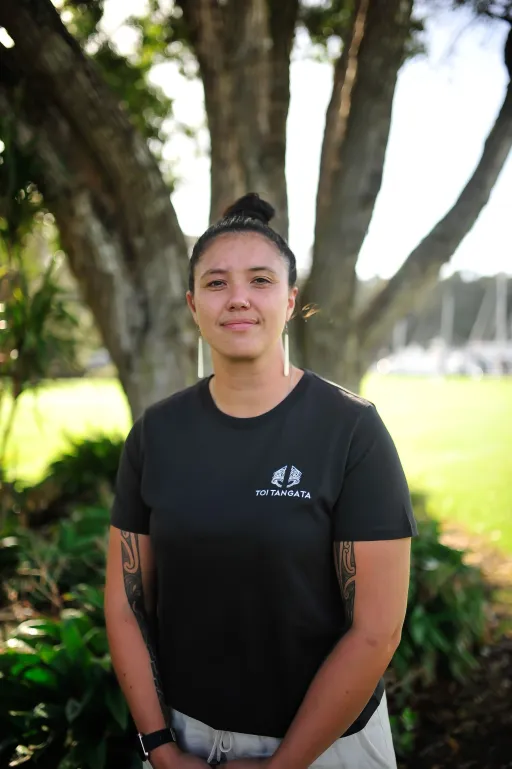
Kia ora, I’m Chelsea. I was born and raised in Kahungunu and have always felt most at home in te taiao, particularly on the maunga and moving my tinana. That love of movement and connection has shaped both my personal life and my professional path.
I am the Design, Innovation and Research Lead at Toi Tangata, our mahi champions kaupapa Māori approaches to rangahau, kori, tākaro and kai Māori. I am also a PhD candidate within Māori physical education and health, with a particular focus on how reconnecting to whakapapa strengthens identity and whānau wellbeing.
At the heart of my mahi is a deep belief that our health is inseparable from who we are, our stories, our whenua, our whānau, and our movement. I am passionate about creating spaces where our people can reconnect, express themselves, and live into their fullest potential.
Why is enhancing equity in health outcomes for Māori, Pacific Peoples and women important to you?
Enhancing equity in health outcomes for Māori, Pacific Peoples and wāhine is important to me because I believe wellbeing is shaped by identity, connection, and the ability to live, express and thrive in who we are. Too often, health has been defined through clinical measures that overlook the relational, emotional, and cultural dimensions that sustain our people.
Through our ‘Ngākau Ora’ research, we want to explore a broader understanding of heart health, one that recognises ngākau as the seat of emotion, memory, belonging, and connection to whakapapa, whenua and whānau. Equity, in this sense, is not only about improving clinical outcomes, but about ensuring that Māori and Pacific communities have space to define health on our own terms.
For wāhine in particular, heart health is intertwined with intergenerational roles, creative expression, grief, resilience, and care for whānau. When we create culturally safe spaces for storytelling, whether written, embodied, or artistic, we support people to process lived experience, affirm identity, and strengthen their ngākau.
For me, advancing equity means revitalising Indigenous understandings of wellbeing and ensuring that Māori voices, knowledge systems, and creative practices are central in how we define and support heart health.
What areas of interest, work, research, skills and experience do you bring to Pūtahi Manawa?
I bring experience in kaupapa Māori-led research that centres mātauranga Māori, storytelling, and whānau wellbeing. My broader research explores how engagement with whakapapa strengthens identity and health, and this lens strongly informs the Ngākau Ora project.
Within Ngākau Ora, I am particularly interested in how storytelling, in written, artistic, and embodied forms supports healing, resilience, and collective strength. In te ao Māori, our stories are carried not only through writing, but through tā moko, whakairo, raranga, mōteatea, haka, waiata, karakia to name a few. These are all forms of heart expression.
My skills lie in designing culturally grounded research processes that support our people through the full journey of expression: from storytelling, to reflection, to sharing. Through writing workshops, retreats, mentoring, and creative support, we are able to observe how engaging in storytelling impacts participants’ sense of ngākau ora.
I also bring experience bridging research and community practice, ensuring that the knowledge generated is not only academically robust, but meaningful and accessible to the communities it reflects.
How have you been involved with Pūtahi Manawa so far?
I am still very new to the Pūtahi Manawa whānau, and it has been a privilege to begin this journey alongside such an inspiring group of researchers.
As a Te Korowai recipient, I have had the opportunity to meet and connect with the other recipients in the early stages of our projects. We have shared our research aspirations, reflected on our kaupapa, and learned from one another’s approaches. I am genuinely excited about the breadth and depth of mahi being undertaken, and the meaningful impact it will have within our respective communities.
The Pūtahi Manawa team has been incredibly welcoming and supportive, creating a space where collaboration, whakaaro sharing, and collective growth are encouraged. I’m looking forward to deepening these relationships and continuing this journey over the coming years — both contributing to and learning from this network as our projects evolve.