

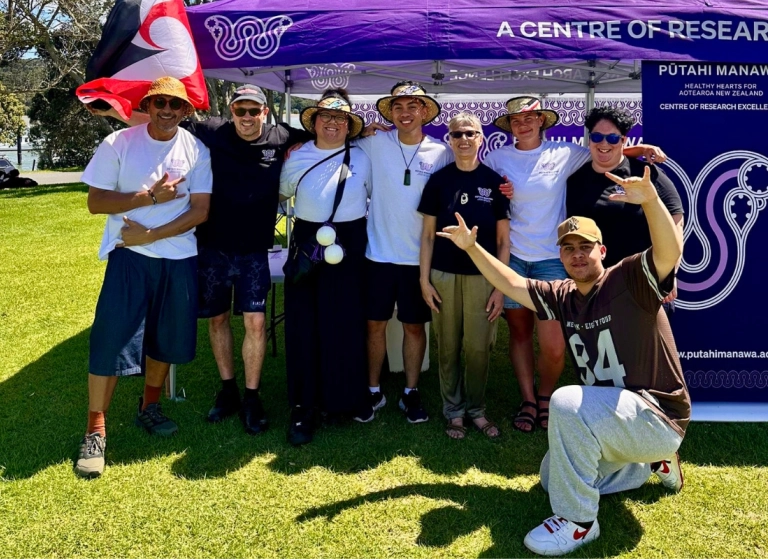
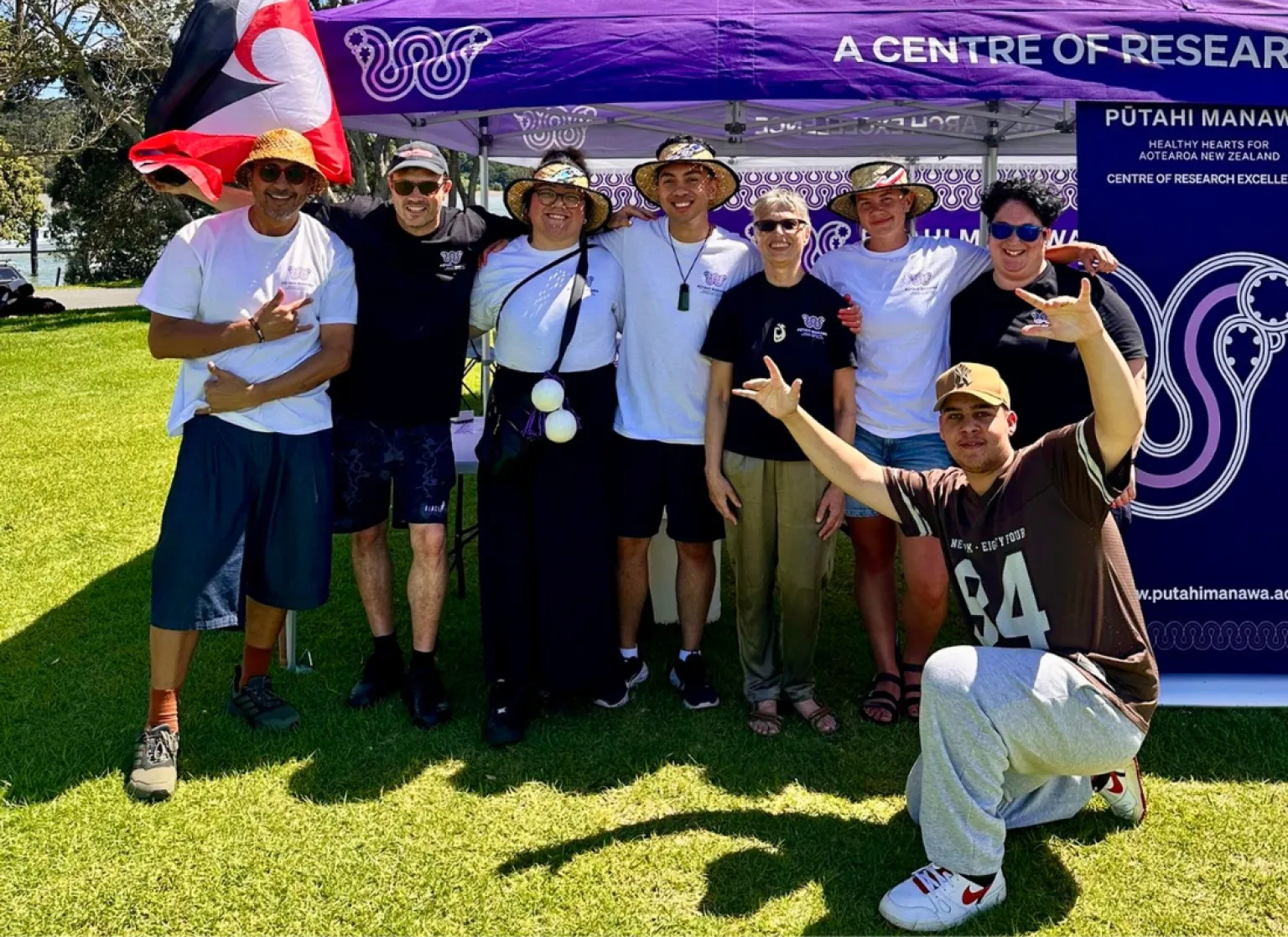
Pūtahi Manawa at Waitangi Day: Togetherness, Alignment, and Purpose
Each year, Waitangi Day offers a moment of collective reflection on Te Tiriti o Waitangi; its promises, its histories, and its ongoing relevance to life in Aotearoa. In 2026, Pūtahi Manawa | Healthy Hearts for Aotearoa returned to Waitangi to actively engage with communities, whānau, health and research professionals, and fellow organisations in conversations that matter: equity, wellbeing, and working collectively to achieve both for Māori.
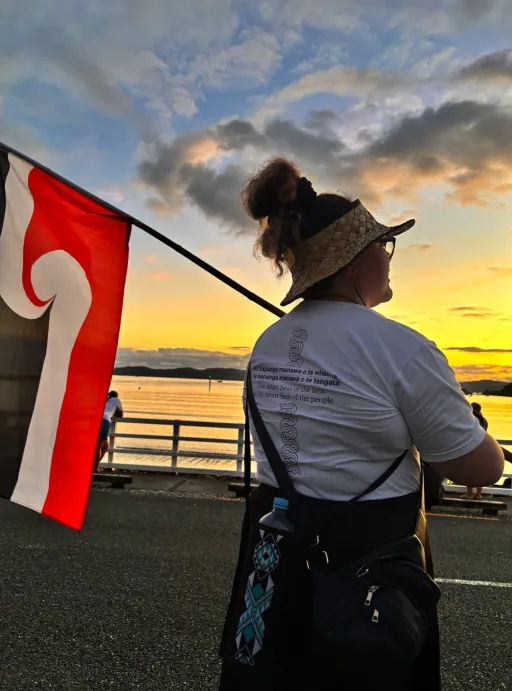
student, taking in the Waitangi sunrise with Pūtahi Manawa 2026
Why Waitangi matters to our mahi
Waitangi Day across Aotearoa New Zealand is a living space where kōrero / dialogue, wero / challenge, and whakawhanaungatanga / connection sit side by side.
Associate Professor Karen Brewer, Co-Director Māori of Pūtahi Manawa, said that for a research centre committed to heart health equity, being at Waitangi is a statement of alignment.
“It recognises that improving health outcomes cannot be separated from Te Tiriti o Waitangi, from tino rangatiratanga, or from the social, political, and cultural determinants that shape health across generations.”
Pūtahi Manawa’s kaupapa is grounded in togetherness, working alongside Māori and Pacific communities, clinicians, researchers, and educators to disrupt the status quo in cardiovascular health.
“Waitangi Day provides a unique environment to demonstrate that commitment publicly and to listen closely to the aspirations, concerns, and lived realities of communities whose knowledge and leadership are essential to meaningful change”, said Brewer.
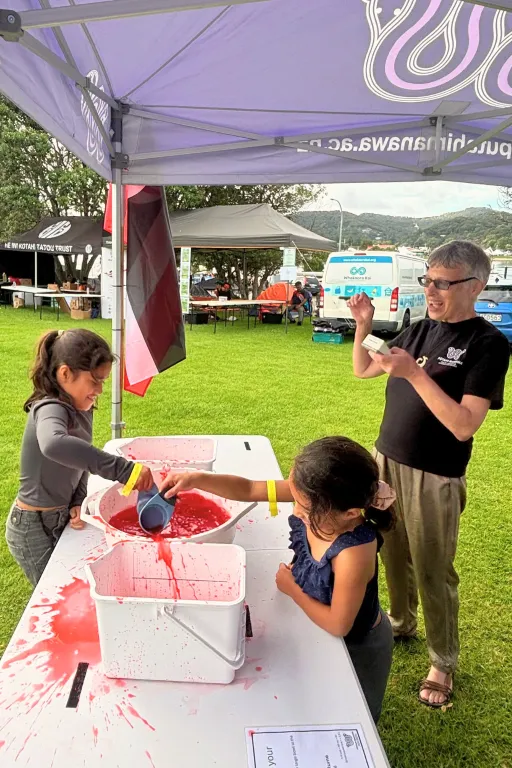
heart does in one minute.
Kōrero and community
At Waitangi, conversations moved fluidly between academic aspirations and everyday heart health.
Matua Joe Pihema, Pūtahi Manawa Pou Tikanga, said that speaking to other organisations about how Pūtahi Manawa supports Māori communities to fashion their own waka, to navigate heart health issues through the research of their own mātauranga, kōrero, and data, resonated deeply.
“Some of the groups we spoke to were amazed that Pūtahi Manawa offered support that uplifted tino rangatiratanga, in particular rangatahi Māori, to undertake their own research using their own cultural framework and worldview”, said Pihema.
This is central to Pūtahi Manawa’s approach: research excellence that is culturally grounded and accountable to the communities it serves. By being at Waitangi, our researchers and partners were able to engage outside institutional walls, building trust and shared understanding in a space where community voices are prioritised.
Dr Fa’asisila Savila, Pūtahi Manawa Research Fellow, said that his presence as a Māori / Pasifika tāne at the Waitangi Day celebrations was important to represent our people in the professional health space.
“Being able to engage with the Māori community ‘in the community’ is such an authentic way to be with or interact with Tangata whenua. It is not something that can be replicated in the lab or office, or in virtual spaces.
There is no replacement for kanohi-ki-te-kanohi engagement with community where individual wairua can be felt and shared – that is deep and meaningful engagement with community.”
Building futures together
The energy at Waitangi is intergenerational and future-focused. Rangatahi, kaumātua, researchers, artists, activists, and whānau gather not only to remember, but to imagine. For Pūtahi Manawa, this aligns with a long-term vision: advancing heart health equity by investing in people, relationships, and systems that endure.
Dr Savila spent most of the day engaging with whānau around their heart health, but his most memorable conversation was an overheard one about one rangatahi who is now gainfully employed in the health sector.
“The participant said that he chose to engage with us (on the day) because he knew Putahi Manawa because he was a youth worker. He mentioned that a young person he had worked with took up a Pūtahi Manawa scholarship and is now involved in a professional health role.
This was such a feel-good moment for me, and this is what Pūtahi Manawa is about”
As Aotearoa looks ahead, the challenge is not simply to reduce disparities, but to reimagine what health and wellbeing can look like when Māori and Pacific knowledge, leadership, and priorities are centred.