

Te Ara Haka Ora: Exploring te ao Māori pathways to heart health
Kapa haka could have a role to play in improving heart health for Māori, with a newly funded research project exploring how kapa haka can inform cardiovascular health measures, prevention and rehabilitation, while strengthening Māori ownership over health data and research.
Te Ara Haka Ora (The Haka Ora Pathway), co-led by the National Hauora Coalition (NHC) and Te Toka Tumai, Auckland City Hospital and funded by Pūtahi Manawa, will explore how kapa haka, whakapapa and mātauranga Māori can inform the journey to cardiovascular health. The project moves beyond responding to illness toward Rauora: whānau flourishing in the fullness of their identity, culture and collective strength.
Pūtahi Manawa is proud to play a part in enabling this research and Assoc. Prof. Karen Brewer, Co-Director Māori, says the project aligns naturally with the grant's original intent.
“Kapa haka is unapologetically Māori, and Māori already know it brings many benefits to health and wellbeing. This project gives us the opportunity to understand how those strengths can inform cardiovascular care in Aotearoa.”
Co-Principal Investigator, Kerry Hiini (Ngāti Hine; Tapuika) says the research responds to a long-standing challenge in cardiovascular care.
"We know effective treatments and rehabilitation programmes already exist. The challenge is whether whānau can access them, navigate them, and stay connected to care as they move between hospitals, primary care, Māori providers and community settings."
Cardiovascular disease continues to disproportionately affect Māori, who experience heart disease earlier and face systemic barriers to prevention, treatment and long-term management.
Jonelle McNeill (Tapuika), an NHC investigator on the project affirms that mātauranga Māori is a strong foundation on which effective cardiovascular care can be designed.
“Through haka, whakapapa and kotahitanga, the project will explore what becomes possible when cardiovascular care is built around the needs of whānau Māori, our realities and our ways of knowing.”
Importantly, kapa haka will remain under the authority and ownership of participating communities and haka collectives and will not be standardised or transformed into a clinical programme.
Building on the strengths of kapa haka
The concept of Haka Ora has been developed over decades, drawing inspiration from kapa haka traditions and Māori understandings of wellbeing.
Over the years, the approach has been used to promote health education and physical activity, integrating expert health advice about conditions such as diabetes and asthma into culturally familiar environments.
A recent pilot programme involving participants living with respiratory conditions showed promising results. Despite many participants living with complex health challenges, the programme achieved exceptional attendance rates and strong participant engagement.
Thomas Strickland (Muriwhenua; Aitutaki), Co-Principal Investigator and lifelong kapa haka practitioner, says kapa haka is a rich, multi-layered strength of te ao Māori.
"Kapa haka is a convergence of physical activity, cultural identity, connection, discipline and whanaungatanga. We've seen firsthand the positive impact it can have on people's wellbeing and confidence. This research gives us an opportunity to understand how those strengths might contribute to heart health and remove barriers to care for whānau", says Thomas.
The study will involve participants receiving cardiovascular care in Tāmaki Makaurau Auckland working alongside established kapa haka collectives, including groups preparing for major kapa haka events. Importantly, kapa haka will not be standardised or transformed into a clinical programme.
“Our role is to work alongside whānau and haka collectives to learn what supports health, strengthens engagement and helps people remain connected to care”, says Thomas.
Protecting Data, Preserving Authority
Artificial intelligence will be explored as a potential tool to support Māori data governance and data sovereignty. Researchers will investigate ways AI can help protect the use of health information while ensuring Māori retain authority over how data is accessed and used.
“Our project includes a fairly small number of people, so we aren’t using AI to make predictions about people and heart disease” says Kerry Hiini.
"We're using it to create a model that will help protect the data, ensuring it is only used for the purposes whānau have agreed to and that Māori authority over that data is respected. The model itself could be applied to future research.”
Future pathways to better health beyond the hospital
A key goal of the project is to explore how successful kaupapa Māori approaches can help strengthen cardiovascular rehabilitation and prevention programmes, helping shift health support beyond the walls of the hospital and into communities.
Researchers hope the findings could eventually inform new models for cardiac rehabilitation, green prescriptions and preventative health initiatives designed specifically by Māori, for Māori.
Jonelle comments that the project’s long-term vision is a shift for Māori from Hauora (health) to Rauora (a state of flourishing or abundant wellbeing).
“Mai i te Hauora ki te Rauora — mā tātou anō tō tātou oranga e whakatere.
From Hauora to Rauora – together we steer our own journey to wellbeing.”
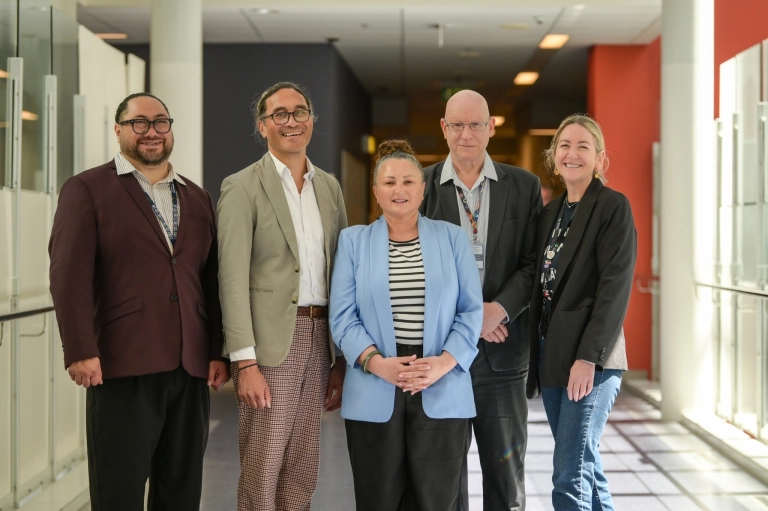
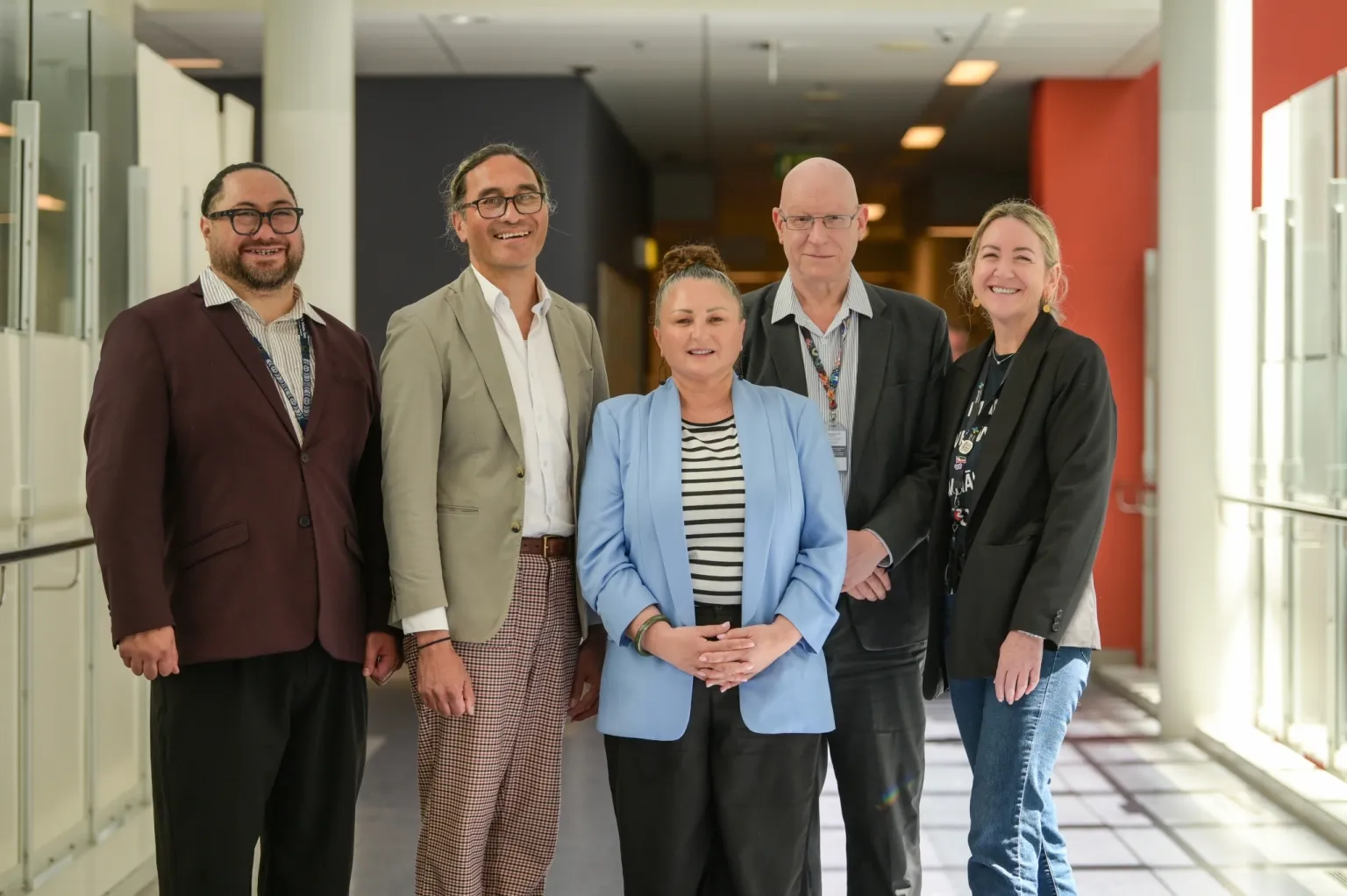
Image provided by Kerry Hiini, featuring L-R: Thomas Strickland (Te Toka Tumai), Kerry Hiini (Te Toka Tumai), Dr Rachel Brown (National Hauora Coalition), Professor Malcolm Underwood (Te Toka Tumai), Jonelle McNeill (National Hauora Coalition).
Absent from the photo is Co-Principal Investigator Associate Professor Anneka Anderson who will lead the research for NHC.