
Strengthening the Heart of Our Communities
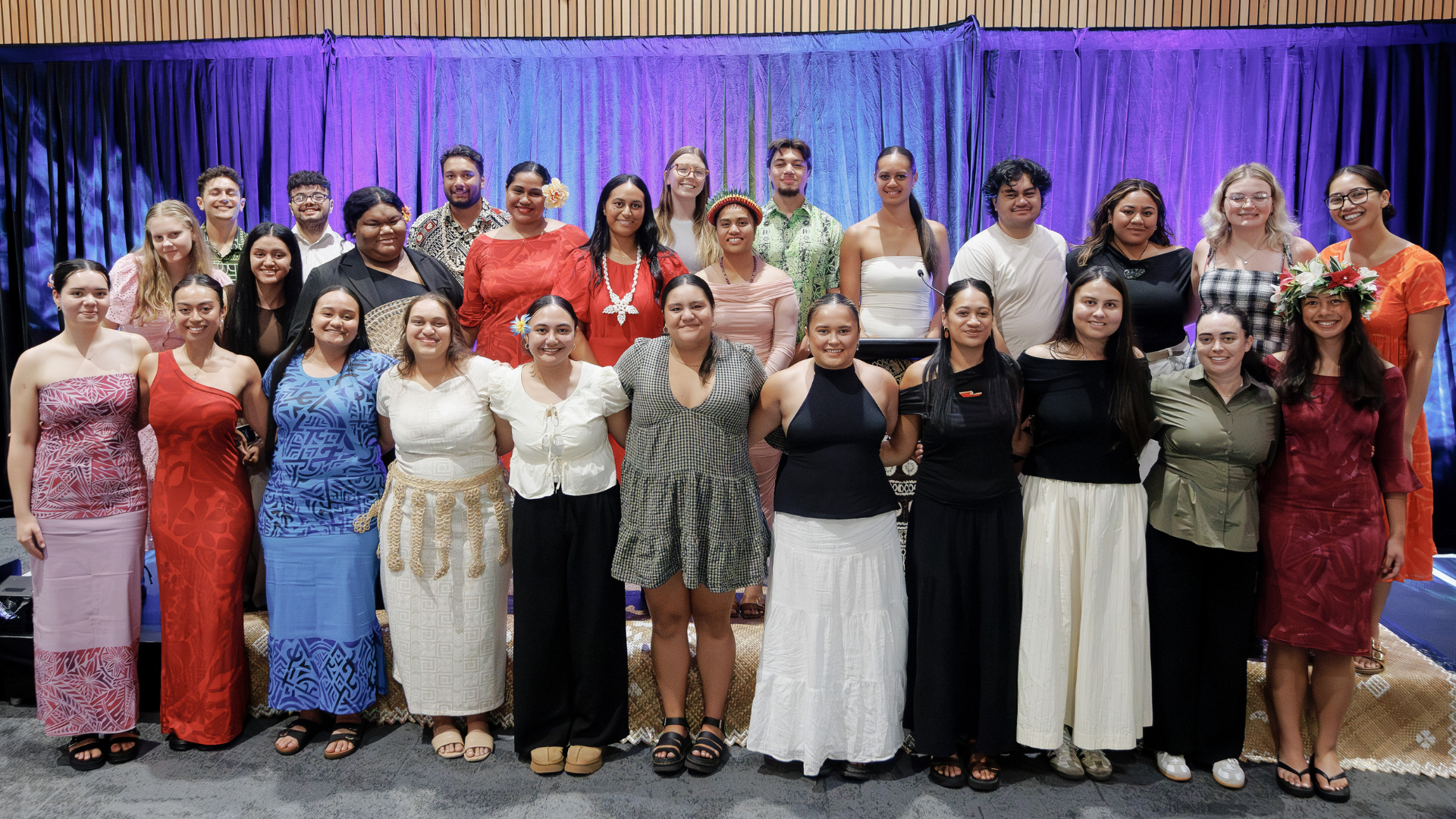
Kura Raumati - a Maori-led summer research programme for Māori - and Fatu Malosi - a Pacific-led summer research programme for Pacific Peoples - both centre on shared identity and values to advance heart health outcomes for iwi, whānau, and Pacific Communities. During Heart Health Month in February, the two programmes wrapped up with 40 students from all over Aotearoa presenting their research over two days at the Waipapa Taumata Rau | University of Auckland and celebrating with whānau/aiga and research colleagues.
Māori and Pacific communities have long carried an unfair burden of heart disease in Aotearoa. Through the two programmes, students from these communities are leading research grounded in values, whakapapa, and a responsibility to future generations.
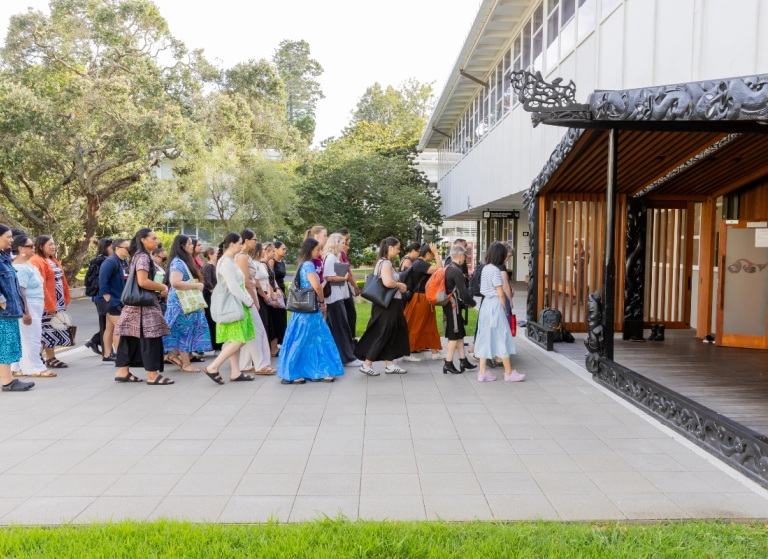
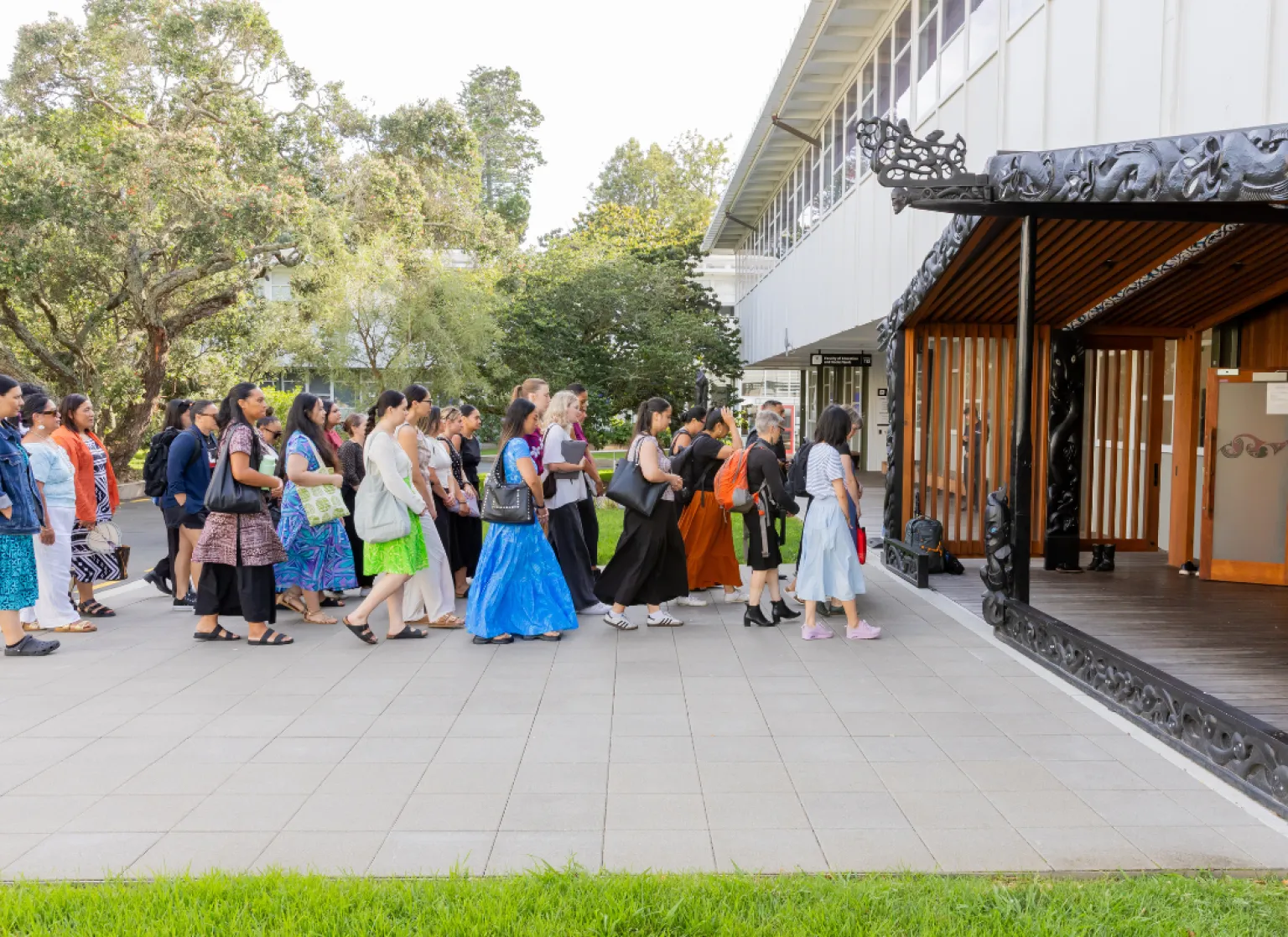
at Ngā Tauira Marae, Waipapa Taumata Rau | University of Auckland
How it works
Associate Professor Karen Brewer (Whakatōhea, Ngai Te Rangi), Pūtahi Manawa Co-Director Māori, has worked on research that shows when health providers and patients share a similar cultural background, this can overcome communication and relational barriers, leading to high-quality care and better health outcomes. A similar concept applies to health research.
“When our communities see themselves in research, engagement is stronger, trust is deeper, and the solutions are more likely to work”, said Brewer.
Soteria Ieremia, Pūtahi Manawa Co-Director Pacific, says the Fatu Malosi and Kura Raumati programmes inspire and support students to continue into the health workforce or the health research workforce, truly advancing heart health equity for our communities.
“Pacific and Māori students bring powerful voices to their research. The positioning and ownership of their own identity is very important for creating solutions that are meaningful to our people”, said Ieremia.
Identity and value-led research design
Over the summer, each student undertook a research project focused on heart health, bringing the total number of students supported by Kura Raumati over three summers and Fatu Malosi over two summers to 100. Students were based in various parts of the country; some at universities, some in the community, and some at home with their own iwi.
Each project strengthens communities' ability to shape their own health futures.

Te Ropere Tipene (Navunievu Village, Bua, Fiji; Ngā Puhi, Ngāti Hine, Kai Tahu, Ngāti Koroki Kahukura), a Fatu Malosi student, examined the roles of Indigenous beliefs, Christian faith, and biomedical science in the recovery of Pacific children after heart surgery. This is especially important for Pacific children, Tipene says, as they have a higher heart disease burden and have limited clinical and surgical access in the Pacific.
“There is an urgent need to understand and strengthen all the dimensions of recovery for Pacific children undergoing heart surgery”. - Te Ropere Tipene
The project centred on real-life holistic recovery practices of Pacific families, providing health professionals with a uniquely Pacific lens to inform future post-surgery recovery plans that include how families already provide their own recovery solutions.

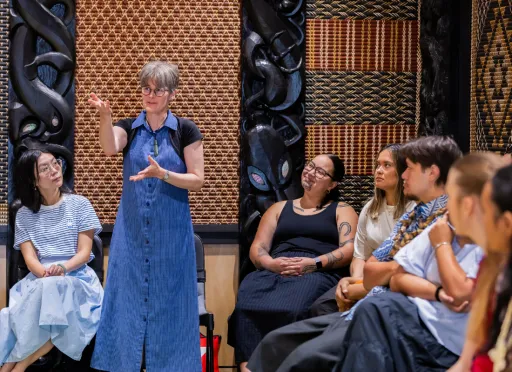
Associate Professor Kim Mellor from Waipapa Taumata Rau | University of Auckland
Dezaia Huia Walker (Ngati Kahu, Waikato, Ngati Kahungunu, Ngai Tai), a Kura Raumati and Pūhoro STEMM student, developed a framework that integrates Te Ao Māori into the physiology and research spaces as part of a broader research project developing novel therapies for diabetic heart disease. During her presentation, Walker said that this matters to Māori because Maori have higher hospitalisation rates from cardiovascular disease associated with Diabetes.
“Advancing Māori heart health equity requires more than scientific discovery. Research environments must recognise tapu (sacredness) and responsibility when working with life and the heart. They must restore noa (balance) through intentional ethical practice and honour Māori worldviews, tikanga, and relational accountability.” – Dezaia Huia Walker
A safe space for achievement
The two programmes aim to provide Māori and Pacific students with a safe, value-led space for heart health research, thereby increasing representation in the heart health and research workforce in Aotearoa.
Fatu Malosi 2026 Emerging Researcher, Jaxson Murphy-Winterstein (Fasito'otai, Eva, Upolu, Samoa; Te Āti Awa), has now completed two Fatu Malosi studentships as well as honours research that was inspired by his first summer research project.
During his honours research at the University of Otago, supported by Pūtahi Manawa, Murphy-Winterstein developed a faster way to assess heart cells’ reactions to drugs intended to treat arrhythmia.
“We developed this faster method because there’s a massive disparity in cardiogenetic research for Māori and Pasifika compared to our European population, and we needed a way to speed up closing this research gap”, Murphy-Winterstein said.
The method then enabled Murphy-Winterstein to test heart cells’ responses to potential new treatments for arrhythmia, yielding some exciting results over the summer for his second Fatu Malosi project.
“Aside from the discoveries of some new potential anti-arrhythmic drugs that we made during my summer research, I have also discovered through Fatu Malosi that research is genuinely something I want to continue to pursue in the future”, - Jaxson Murphy-Winterstein.
Kura Raumati student, Arihia Waitai-Morehu (Ngāti Tamatera, Ngāti Whātua ki Ōrākei, Ngāti Whātua ki Kaipara), conducted research with her own iwi, exploring the unique language and meanings around heart health for Ngāti Whātua Ōrakei. After her first taste of research, she says it’s not as scary as she had thought.
“I have discovered and developed an entirely new perspective on research and how useful it is, but also how much mahi goes into it. I have discovered a new part of my iwi, formed new friendships and relationships, and found out just how many amazing kaimahi are backing our people for the betterment of their health, their hauora, and their lives. I have discovered passion in a place where I only knew fear”. - Arihia Waitai-Morehu
Three students had the opportunity to gain experience working with media during the summer:
Waitai-Morehu and Oaklea Bowden-Morris shared their research with Te Ao Māori News
Murphy-Winterstein was interviewed live on Pacific Mornings.