

Three projects, three million dollars, one goal: Turning cardiovascular research into better health for Aotearoa
Pūtahi Manawa has funded three major projects that will advance innovative, equity-focused cardiovascular research to improve the health and wellbeing of communities across Aotearoa New Zealand.
With around $1 million awarded to each project, these investments support multidisciplinary teams in moving promising research towards practical solutions that can improve prevention, healthcare delivery, and long-term outcomes for people living with or at risk of cardiovascular disease.
As the national Centre of Research Excellence (CoRE) for heart health equity, Pūtahi Manawa is building a uniquely Aotearoa approach to cardiovascular research—bringing together mātauranga Māori, Pacific leadership, biomedical science, engineering, population health and community partnership. By investing in outstanding researchers and fostering the next generation of research leaders, the CoRE is helping translate research excellence into healthier communities, stronger health systems and lasting impact for Aotearoa.
of the Integrated Management of Acute Rheumatic Fever and Rheumatic Heart
Disease in the Hutt Valley: A focus on Pacific Leadership.
Hosted by Pacific Health Service Hutt Valley
Strengthening Pacific leadership in rheumatic fever prevention
This project will strengthen coordination to prevent acute rheumatic fever (ARF) and rheumatic heart disease (RHD) in the Hutt Valley through Pacific leadership and community partnership.
Working closely with Pacific Health Service Hutt Valley and Pacific communities, the research will co-design culturally grounded approaches to sore throat management, referral pathways and follow-up care. By linking public health, primary care, community providers and hospital data, the project aims to create a more coordinated system that uses real-time information to guide prevention efforts and improve outcomes for Pacific communities.
The team will also evaluate how the latest national ARF and RHD guidelines are being implemented locally, exploring how stronger local leadership and coordination can improve effectiveness, accountability and equity compared with traditional top-down delivery models. Alongside improving care, the project will build Pacific workforce capability in health-system coordination, data literacy and evaluation, while supporting three doctoral students.
"Preventing acute rheumatic fever requires solutions that are designed with communities, not simply delivered to them. By strengthening Pacific leadership and local coordination, we hope to create a model that not only improves outcomes for families in the Hutt Valley but can also be adapted by other communities across Aotearoa facing similar challenges." — Dr Tua Taueetia-Su'a, Co-Lead Investigator.
Harnessing te hā to improve heart and mental health

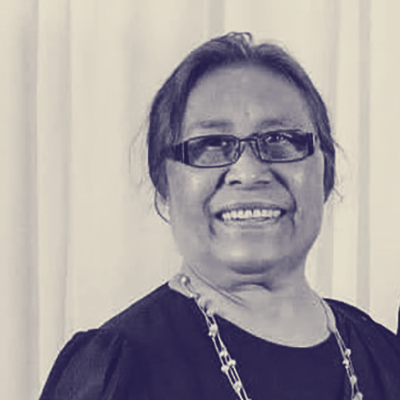
improved heart and mental health outcomes. Hosted by Ōtākou Whakaihu Waka | University of Otago.
Can something as simple as the way we breathe improve both heart and mental health? This innovative project will investigate exactly that, combining leading cardiovascular science with mātauranga Māori to explore how te hā (the breath) can support hauora.
“Alongside our heart disease burden, Aotearoa has a mental health crisis – we have the 4th highest prevalence of anxiety globally with the highest incidence in Māori, where up to 70% of us will experience disabling levels of anxiety in our lifetime”, says Dr Olivia Harrison, Co-Principal Investigator on the project.
Anxiety is associated with a significantly increased risk of developing cardiovascular disease, yet little is known about the early changes that occur in heart health before disease develops.
This research will provide the first in-depth assessment of cardiovascular health markers in an at-risk population prior to any diagnosis of cardiovascular disease, while testing whether structured breathing practices can improve both physiological and psychological wellbeing.
The research team is co-designing the intervention with community members from a local Marae, drawing on both contemporary science and Māori knowledge. Alongside evidence-based breathing techniques, the programme will incorporate Kaupapa Māori practices, such as porotiti (traditional spinning discs), to help restore balance in the body's autonomic nervous system. Over a 12-week programme, the team will assess whether these accessible, low-cost approaches can improve heart health markers while reducing anxiety.
Beyond the research itself, the project has strong potential for real-world impact. The findings could inform the development of scalable resources for healthcare providers and communities, support the development of digital breathing activity tools, and contribute to new approaches to preventing cardiovascular disease while improving mental wellbeing across Aotearoa.
"Our goal is to demonstrate that prevention can be both scientifically rigorous and culturally grounded. By bringing together mātauranga Māori and cardiovascular science, we hope to develop practical, accessible approaches that strengthen both heart and mental health and can make a meaningful difference for communities across Aotearoa." - Fraser Beck, Co-Principal Investigator.
Building on Sweet Pressure to improve lifelong heart health
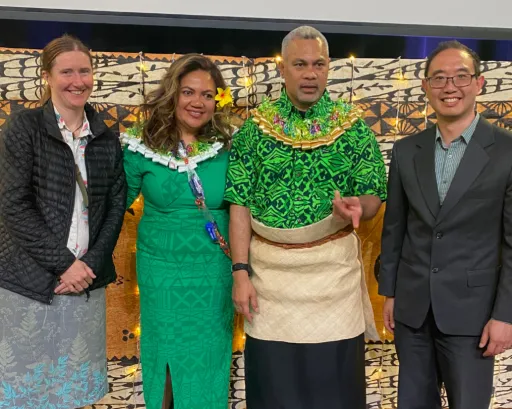
titled Sweet Pressure: Improving outcomes for people with diabetes and high blood pressure in Aotearoa, with
co-founders of Amanaki STEM Academy, Tanya Koro and Viliami Teumohenga.
The project is hosted by Waipapa Taumata Rau | University of Auckland.
Building on the success of the Sweet Pressure Integrated Research Module, this project will take the next step towards improving outcomes for people living with both diabetes and high blood pressure—a combination that dramatically increases the risk of cardiovascular disease.
The team's previous research found that Sweet Pressure, the co-existence of high blood sugar and high blood pressure, affects Māori and Pacific peoples at rates two to three times higher than New Zealand Europeans, highlighting an urgent need for more equitable approaches to prevention and care. This new project will work alongside community partners to develop and test practical, culturally relevant strategies that support earlier identification, more personalised care and healthier lives.
The programme brings together four complementary research streams. Researchers will investigate new ways to predict cardiovascular risk using cholesterol, inflammatory markers and genetics, while also evaluating whether continuous glucose monitoring can empower people to make lasting lifestyle changes. Alongside these clinical studies, the team will expand an innovative STEM education programme that supports Pacific families to improve health and wellbeing together.
By combining cutting-edge biomedical research with community-led initiatives, the project aims to deliver solutions that are both scientifically robust and grounded in the realities of people's lives. The findings will help shape more personalised approaches to preventing cardiovascular disease and reducing inequities for Māori and Pacific communities across Aotearoa.
"Our research has shown that improving outcomes for Sweet Pressure requires more than treating individual risk factors in isolation. By combining science, technology and strong partnerships with communities, we hope to develop practical solutions that empower people and whānau to manage their health and reduce their long-term risk of cardiovascular disease."
Together, these three projects demonstrate the breadth of research enabled by Pūtahi Manawa—from strengthening Pacific-led models of care and exploring the connection between breathing, mental wellbeing and heart health to developing more personalised approaches to preventing cardiovascular disease.
Each project tackles a different challenge, while sharing a common purpose: producing research that is scientifically excellent, grounded in the knowledge and aspirations of communities, and designed to create real-world impact. Through collaboration across disciplines, universities, health providers, iwi, Pacific organisations and communities, these projects are generating new knowledge, growing research capability, and helping shape more equitable approaches to preventing and managing cardiovascular disease.